

Hospitals can be overwhelming environments, particularly for patients with dementia, delirium, or disability.
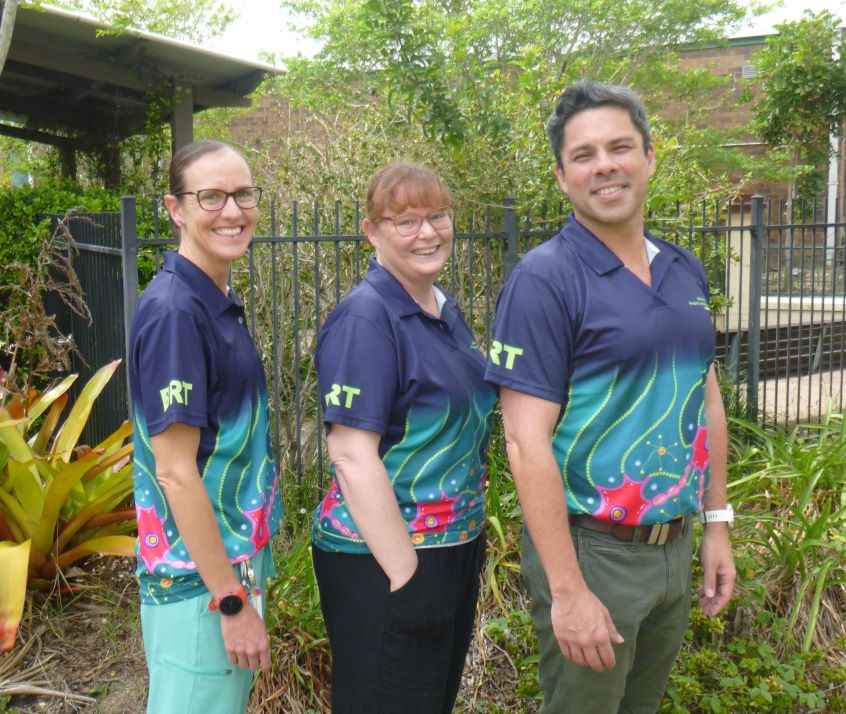
Recognising this, Wide Bay Hospital and Health Service has introduced the Behavioural Response Team (BRT), a specialised service designed to improve safety, reduce distress, and strengthen support for both patients and staff.
The contemporary, transdisciplinary service focuses on identifying unmet needs and providing evidence-based strategies to improve safety and wellbeing. While not a crisis intervention service, the BRT works alongside staff and carers to reduce risks, develop behaviour support plans, and introduce practical interventions that can make a meaningful difference.
Service lead clinicians explain that behavioural change often reflects attempts to communicate distress, pain, or unmet needs. By addressing these underlying factors, the team can ease patient agitation and reduce the load on staff.
Integrated Care Rehabilitation Team Leader Rebecca Nieman said it had been incredible to see the tangible impacts of the service since its launch in January.
“We had one patient who was admitted to hospital in a state of severe distress and sleeplessness,” she said.
“Our team took the time to understand his history, triggers, and priorities.
“Moving him to a single room with reduced stimulation and making some personalised minor modifications made the world of difference.
“Within 48 hours, he was able to rest for the first time in days, and staff reported a significant reduction in care demands.
“A month later, monitoring showed only one hour of agitation across an entire week which was a dramatic improvement from his admission.”
This consumer is just one of more than 300 who have benefited from the service this year.
Early learnings point to the importance of bedside education, staff support, and collaborative approaches to care.
The BRT continues to build capacity across the hospital, supporting staff and carers while enhancing the quality of care for some of the region’s most vulnerable patients.
Operations Director of Integrated Care Trudie Diserens said as the BRT carefully assesses patients for unmet needs, the same principles apply to supporting staff and carers.
“Robust bedside education ensures clinicians understand the value of our work and its impact on care delivery,” she said.
“By strengthening staff capability alongside patient care, the BRT is building a more compassionate, safe, and sustainable approach to managing complex behaviours in hospital.”