

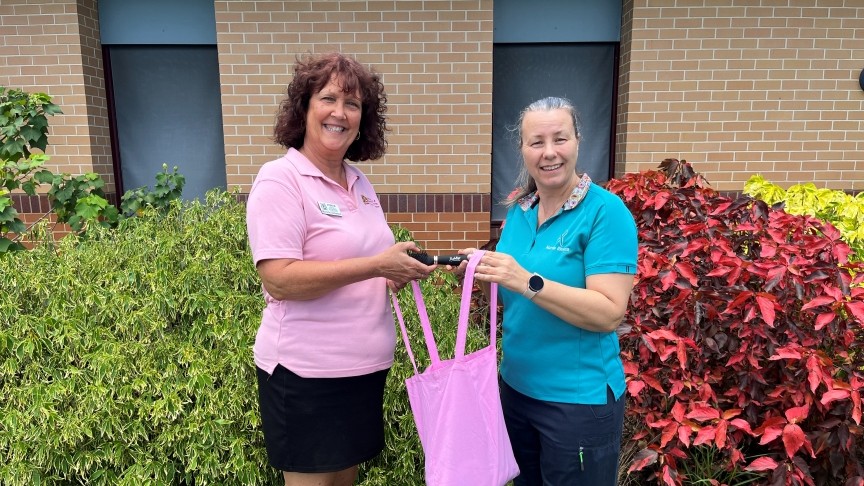
The Fraser Coast Sexual Assault Response Team and Zonta Club have combined to ease the trauma of examinations on victim-survivors.
The Hervey Bay chapter of the Zonta Club is donating clothing packs for victim-survivors who have undergone forensic medical examinations at Fraser Coast facilities.
Items of clothing are often retained as evidence for police investigators, leading patients to feel embarrassed and self-conscious following the examination.
The clothing packs include shorts and shirts of various sizes, underwear and toiletries.
Clinical Nurse Consultant Emma Turner said the packs are part of a strategy of prioritising the wellbeing of patients traumatised by sexual assault.
“Access to appropriate clothing and personal care items is a small but meaningful way to support someone at one of the most vulnerable times in their life,” she said.
“It just helps them feel like they're human again.”
Zonta Club of Hervey Bay president Michelle Lockwood said it’s a small gesture to show victim-survivors they have support in the community.
“This is just our little bit of being able to help those victims feel that people are looking after them, and they can move forward from whatever experience they've had positively,” she said.
A Hervey Bay RSL grant paid to the Zonta Club for a storage shed freed up funds to pay for the initiative.
Emma said about five victim-survivors present to the Fraser Coast Sexual Assault Response Team every month.
The forensic medical examinations carefully collect evidence for the case against the alleged perpetrator, and are crucial to the victim-survivor being supported by the justice system.
The Sexual Assault Nurse Examiners (SANE) take a trauma-informed approach to the procedure by viewing it as a form of treatment as well as an evidence collecting exercise.
Emma said it’s a challenge for the SANEs, who “work at the threshold of health and justice”.
“It's quite a difficult area to work in … we need to provide clinical care to the patient while also maintaining forensic standards,” she said.
“Having a forensic examination helps to validate that person, and makes them feel heard and understood.
“While forensic evidence collection is an important component of our role, our priorities are always the wellbeing, safety and dignity of victim survivors.”