
Strengthening local partnerships through a coordinated, trauma-informed approach to sexual assault in the Wide Bay region is ensuring those impacted are receiving the best support possible from community agencies.
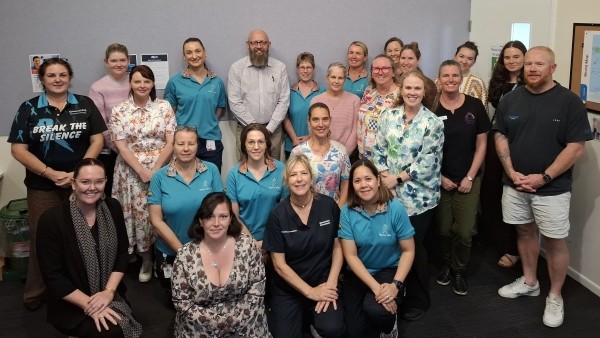
Organised by the Sexual Assault Response Team from Wide Bay Hospital and Health Service (WBHHS), the Sexual Assault Symposium attracted agency representatives focused on delivering safe, effective and person-centred responses to sexual violence.
WBHHS sexual assault nurse examiners, clinical nurse coordinators and doctors joined representatives from Forensic Medical Queensland, Queensland Police Service, Maryborough Correctional Centre, legal services, Edon Place and Phoenix House to discuss the importance of a collaborative response to sexual assault.
WBHHS Sexual Assault Nurse Examiner Kate Hamilton said the presentations from various agencies fostered meaningful discussion around current challenges and opportunities within the service system.
“The insights from all speakers provided attendees with a greater understanding of each sector’s role and reinforced the importance of collaboration in supporting victim-survivors,” she said.
WBHHS staff shared the role they play when someone presents following a sexual assault including sexual assault nurse examiners (SANE) who are specially trained clinical nurses.
SANE staff member Kate Hamilton said it’s not always clear to people what her team’s responsibilities are and how their work contributes to the overall response from community agencies.
“When an individual discloses a sexual assault, first and foremost we provide emotional support and reassurance,” Kate said.
“We are seeing people in their most vulnerable state and the best we can do is to believe, listen and give choice and control back to the victim-survivor.”
SANEs are responsible for obtaining a detailed history from the victim-survivor, performing a forensic examination and collecting, documenting and preserving forensic evidence. Findings are documented in the event SANEs are later required to provide testimony in court.
Kate said there are many misconceptions people often have about forensic medical examinations and think they must report to police to have an examination.
“This is untrue, there are two types of examination that we do at the hospital,” she said.
“A collect and analyse is where police are notified and a collect and store is where forensic swabs are collected and stored for two years with Forensic Queensland before being destroyed.
“This allows people who are unsure if they want to proceed with police involvement, to have time to decide.
Kate said there is also the misconception that only people with obvious physical injuries need a forensic examination.
“Many survivors have no visible injuries. A forensic medical examination may still be important for healthcare needs, documentation, emotional support, and potential evidence collection,” she said.
“We can find evidence up to seven days post assault, depending on what has occurred and what swabs have been taken.”
WBHHS is actively recruiting SANEs in Bundaberg and the Fraser Coast to have more registered nurses join the team. The SANE role is a paid position with a voluntary 24/7 ‘on call’ roster arrangement.
More information about the Sexual Assault Support Service is available on the WBHHS website here.