

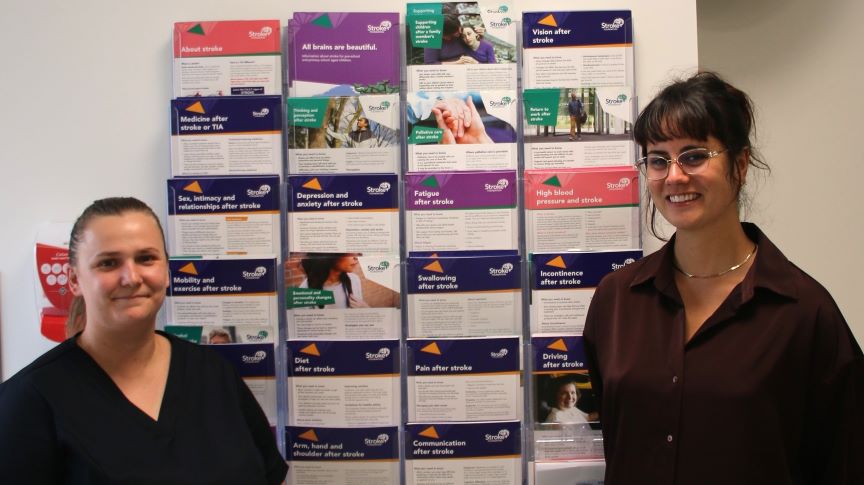
Stroke unit accreditation at Hervey Bay and Bundaberg Hospitals is a step closer with the recent appointment of a stroke coordinator.
Made possible with funding from the Australian Stroke Coalition and Australian Stroke Alliance, this role will build on the successful patient outcomes already seen within Wide Bay Hospital and Health Service (WBHHS). It will also help in delivering on the 30/60/90 National Stroke targets and enhance preparation for achieving stroke unit certification.
The stroke coordinator’s primary focus is reviewing current stroke care processes and aligning them with national standards and clinical guidelines.
With a strong background as an emergency and critical care nurse with a passion for stroke care, Stroke Coordinator Faye Bartlett is ready to make a difference and build on the great work already achieved.
“I’ve seen many patients over the years who have had strokes and when they receive timely intervention, they have much better outcomes. It’s the opposite when delayed,” Faye said.
“As a stroke coordinator I am working closely with clinicians from emergency, medical and allied health, discussing ideas and strategies.
“Through changes in policy and protocols, we aim to improve our ability to respond more effectively to stroke calls and expedite care and treatment for patients.”
Since starting in the role in April, Faye said the stroke unit team has been very welcoming and supportive.
“While nursing in other areas of the hospital I’ve already seen the positive impact made by changes to stroke care at our health service,” she said.
“This has improved a patient’s journey, and I hope I can effect more change like this in my role.
“Being able to get stroke units accredited and used at Hervey Bay and Bundaberg hospitals would really impact the care we can give to these patients.
“They could stay near their home and still receive the same level of care offered at larger hospitals.”
Over the last two years, Hervey Bay Hospital Clinical Nurse Consultant Torrie Scott-Paku has contributed to building the stroke care program along with members of the allied health team. When the opportunity to apply for funding arose, she was involved in submitting the application which resulted in WBHHS being among only 15 health services nationwide to be awarded the funding boost.
“This is something we’re really proud of,” she said.
“There are a lot of moving parts to stroke care which has a holistic approach involving many different wards and clinicians.
“So having a stroke coordinator is extremely important in helping bridge the communication between all who are involved in the patient’s care.
“The role is vital to help create systems and structure, so clinicians are aligned in their practices. This reduces length of stay and helps contribute to better patient outcomes.
“Also, when patients see a familiar face throughout their stroke journey from arrival to discharge, and have someone who understands their individual experience, it provides a great sense of reassurance.”