

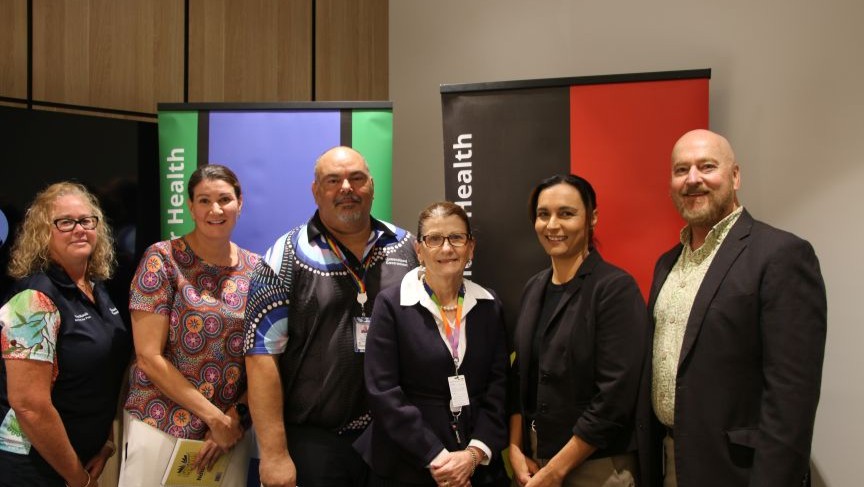
A series of initiatives aimed at improving health outcomes for Aboriginal and Torres Strait Islander peoples were officially launched at a recent roadshow, highlighting the Wide Bay Hospital and Health Service’s (WBHHS) ongoing commitment to delivering more culturally responsive care.
Attended by Board Chair and Board members, Queensland’s Chief Aboriginal and Torres Strait Islander Health Workforce Officer Rica Lacey and representatives from WBHHS and community, the roadshow was organised to gain local insights into First Nations healthcare, celebrate successes and recognise challenges.
Through shared goals and relationships, the roadshow’s aim was to work together to retain a strong, culturally capable First Nations workforce.
This event was the perfect opportunity to launch the WBHHS Aboriginal and Torres Strait Islander Workforce Plan 2025 – 2028. The plan is a critical step in building a health workforce that is representative, inclusive, and culturally safe. It includes ways to:
- increase the recruitment and retention of Aboriginal and Torres Strait Islander staff
- provide meaningful career development opportunities
- foster leadership pathways for Aboriginal and Torres Strait Islander health professionals
Launched at the same time was the WBHHS Health Equity Strategy 2025–2028 which focuses on embedding cultural safety across healthcare delivery, partnering with Aboriginal and Torres Strait Islander communities to design solutions together, and being accountable through measurable outcomes and transparent reporting.
At the event, Chief Executive Debbie Carroll said these initiatives were an important part of WBHHS operations.
“We know that having a culturally diverse workforce improves the quality of care and ensures our services are more responsive to the needs of our communities,” she said.
“This forms part of a broader focus on health equity aiming to remove long-standing barriers and close the health gap for Aboriginal and Torres Strait Islander peoples.”
Both the Aboriginal and Torres Strait Islander Workforce Plan and Health Equity Strategy are meeting community needs with valuable input received from staff, community partners, and stakeholders.
“Those voices have shaped the content which is critical to the success of the plan and strategy,” Ms Carroll said.
“These are not just documents but a commitment to action, accountability, and partnership.”
Ms Carroll said celebrating the launch was a clear indication of how far WBHHS has come and a reminder of the work that lies ahead.
“We are proud of the progress we’ve made, but we know that achieving true health equity requires ongoing effort, collaboration, and commitment,” she said.
“I encourage all of us, whether we are health professionals, community members, or partners, to continue working together to bring these plans to life.”
Executive Director Aboriginal and Torres Strait Islander Health Paul Weir welcomed the opportunity for the roadshow to include an open yarning circle so Aboriginal and Torres Strait Islander health practitioners, health workers and other identified staff could connect.
“They were able to raise issues, provide updates on success stories and ask questions in a culturally safe environment,” he said.
“They were also able to share insights directly with the Office of Chief Aboriginal and Torres Strait Islander Health Workforce Office team which will be used to help shape the future of the First Nations workforce.”