

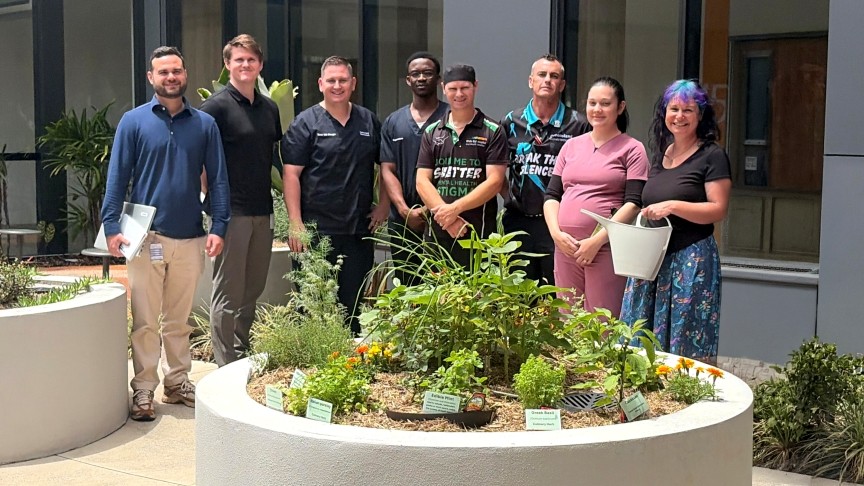
The 2026 theme, Build Community, Build Wellbeing shone brightly during Mental Health Week (3 – 11 October) when staff and consumers from the Fraser Coast Acute Mental Health Inpatient Unit came together to plant a therapeutic garden.
It was this theme that inspired the planning around the garden activity for the purpose of empowering staff and consumers to approach recovery with hope, connection, purpose, and create environments that support overall mental wellbeing.
The therapeutic garden has now transformed the Low Dependency Unit courtyard space into a welcoming, calming environment.
Nurse Unit Manager Bryce Maguire said the space provided opportunities for consumers to spend time outdoors, engage in meaningful activities and take a break from the clinical environment.
“The garden has been planted with a variety of different herbs, spices, and native plants that offer sensory benefits to consumers – smell, touch, taste and sight,” he said.
“The plants can also be used for cooking and meal preparation on the ward by consumers and our Mental Health Ward catering staff.”
A highlight of the gardening project was seeing consumers and staff working together towards a common goal, sharing laughs, smiles and stories of their gardening experiences.
Bryce explained how consumers were actively involved in planting the space, and many spoke about enjoying the chance to contribute something lasting for the unit.
“Staff also embraced the activity, with this shared experience helping to strengthen therapeutic relationships and create a sense of community within the unit,” Bryce said.
“By the end of the day, there was a real sense of achievement and humbleness by all involved.”
The Fraser Coast Acute Mental Health Inpatient Unit provides specialist assessment, treatment and support for people experiencing significant mental health challenges that require acute inpatient care.
Its multidisciplinary team includes mental health nurses, psychiatrists, allied health professionals, peer workers, and support staff who work collaboratively as a team with consumers and their families.
The team provides recovery-focused care, therapeutic programs and support planning to help individuals stabilise, build coping strategies and transition back into the community.
Staff interaction with patient activities contributes to successful outcomes in their recovery.
“When staff engage with consumers in meaningful activities outside of traditional clinical interactions, it creates opportunities to build on this therapeutic rapport which are fundamental to recovery. Consumers are more likely to feel supported, valued and empowered in their care,” Bryce said.
“Activities such as gardening also provide opportunities to develop confidence, social skills, routine and a sense of accomplishment, all of which contribute to improved wellbeing and recovery outcomes.”
Bryce added the therapeutic garden is a wonderful example of what can be achieved when consumers and staff work together towards a shared goal.
“We are incredibly proud of and thankful for everyone who contributed to the project, particularly our guest expert Julie Melhop from the Wide Bay Hospital and Health Service Wellbeing team, and look forward to seeing the garden continue to grow and provide benefits for consumers in years to come.”