

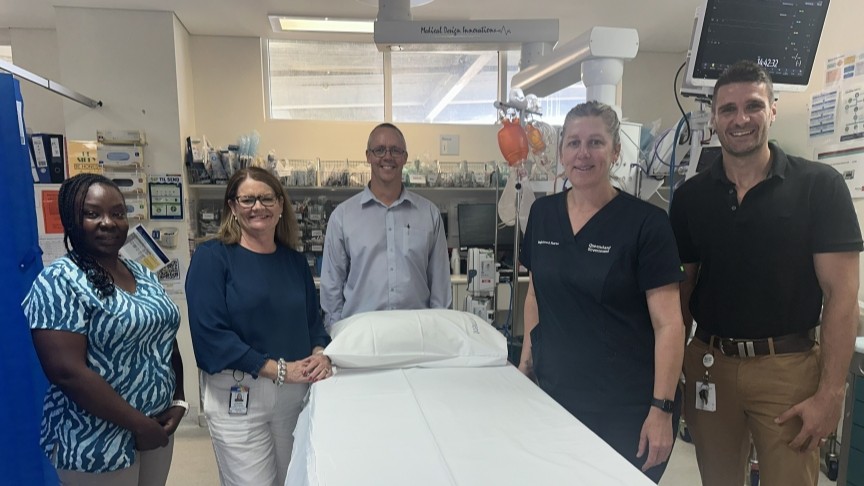
Mental health support for the Wide Bay community has received a boost with the recruitment of seven specialised emergency department mental health nurses at Wide Bay Hospital and Health Service (WBHHS).
While working alongside emergency staff, the Emergency Mental Health Parallel Care Clinicians (EMHPCC) ensure people presenting with mental health concerns have more timely access to experienced mental health clinicians at the same time as their emergency medical care.
EMHPCCs are authorised mental health practitioners with advanced clinical and risk assessment and decision-making skills. They have postgraduate qualifications in mental health nursing at Master's-level education, with further nurse practitioner studies forming part of ongoing professional development.
Acting Executive Director of Mental Health Clarissa Schmierer said a key feature of the EMHPCC role is that patients can be assessed earlier with specialist mental health input directly available to the treating emergency team.
“One of the most important benefits for patients is earlier access to specialist mental health assessment, potentially at a time of crisis,” Clarissa said.
“Having an EMHPCC nurse practitioner in our emergency departments allows decisions to be made with a clear understanding of the patient’s mental health needs and the services available across the region.
“Ultimately, patients are receiving timely, compassionate and person-centred care.”
People presenting with mental health concerns often have other contributing factors related to physical health, or other social and psychological stressors.
The EMHPCCs are qualified to complete comprehensive mental and physical risk assessments. This enables them to identify immediate safety concerns so they can develop treatment and safety plans; provide short-term mental health support; and determine the most appropriate referrals for the patient.
Emergency staff specialist Dr Adam Michael said emergency clinicians face a range of challenges in caring for patients experiencing mental health crisis and has welcomed the addition of EMHPCC nurse practitioners to the emergency department.
“Some of those challenges are fragmentation and lack of continuity of care,” he said.
“Having EMHPCC clinicians rostered in the emergency department will help to reduce these barriers as they focus on this patient cohort and contribute to continuity of care through their links to other mental health services.
“We’re hopeful that early intervention and referral of appropriate patients to support services by EMHPCC staff will reduce the rate of representations and promote early patient centred care which will optimise the chances for early recovery.”
The EMHPCC Nurse Practitioner role not only supports improved patient care and emergency department flow but also is a strong example of staff living the WBHHS values through their everyday actions and behaviours.
Collaboration is central to the role as the nurse practitioner works closely with emergency clinicians and other services.
Accountability is demonstrated through advanced clinical assessment and evidence-informed decision-making ensuring patients are connected with the most appropriate follow-up and support.
Respect is shown through compassionate, trauma-informed and non-judgemental care as people present at one of the most vulnerable points in their lives.
Excellence is supported through advanced nursing practice carried out alongside emergency medical care and most importantly, staff are seeing things through patient’s eyes, delivering care that considers the whole person rather than only the immediate crisis.