

Sometimes the greatest difference we can make in someone's healthcare journey is not found in a treatment plan or a hospital ward.
It comes from looking beyond their diagnosis, listening to what matters to them and working together to make a better life possible.
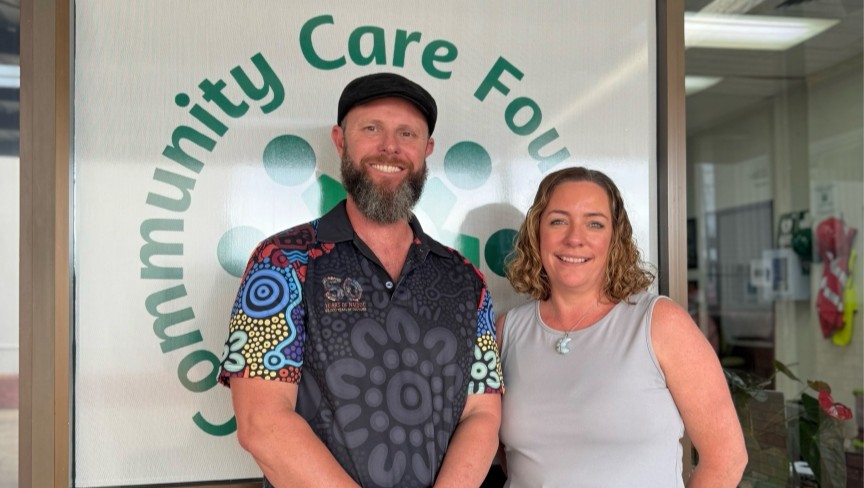
For Maryborough patient Miss J, that difference came through the collaboration of Glen Bovey, Nurse Navigator – Integrated Care at Wide Bay Hospital and Health Service (WBHHS), and Elisa Weir, Team Leader at Community Care Foundation (CCF).
When Glen first became involved in Miss J's care in 2024 she was living with multiple chronic health conditions, cerebral palsy and significant physical and cognitive impairments.
Her home, an old Queenslander with considerable accessibility challenges, made it extremely difficult to leave safely, attend appointments or participate in the community.
Her health challenges were compounded by social isolation, declining mental wellbeing and an environment that was no longer meeting her needs.
Miss J told Glen she felt “low, blue, like nothing, unloved, like a prisoner, like I have nothing to live for – all I see are these four walls”.
She presented to the Emergency Department eight times in 2025, accumulating 51 inpatient bed days.
It became clear that simply treating her medical conditions and returning her to the same environment would not address the underlying challenges.
It was time for a different approach.
Chance conversation a turning point
Glen explored alternative housing options, gathering evidence and working through the various health, housing and NDIS processes.
Progress was difficult, with funding barriers and limited options creating repeated setbacks.
The turning point in Miss J’s journey was a chance conversation with Glen and Elisa about another client.
Glen mentioned Miss J's circumstances, and Elisa brought a fresh perspective and a willingness to look beyond the usual pathways.
With Miss J's consent, they began working together towards one shared goal: finding a safe living environment where she could regain her independence and have a life worth living.
One of the biggest challenges was that Miss J did not have formal Supported Independent Living (SIL) funding in her NDIS plan.
However, Elisa found an opportunity to use her Assistance with Daily Living funding differently within a shared living arrangement.
This meant Miss J could move into a more appropriate environment without waiting months for a traditional SIL funding package.
Glen paid tribute to Elisa's dedication and advocacy despite there being no guarantee of financial return for CCF.
"Elisa became a fierce advocate for Miss J, working tirelessly to get outcomes,” he said.
“When a door was shut in her face, Elisa dusted herself off and got back up and kept fighting."
In the first two weeks in her new home Miss J went out more often than she had in the previous four years - visiting her favourite coffee shop, going ten-pin bowling and attending birthday celebrations.
She has taken greater control of her banking, is helping support workers prepare her meals and is attending face-to-face health appointments for the first time in years.
Miss J is also planning a touching, deeply personal visit to Hervey Bay to honour the passing of her father, mother and sister.
While living in her old home she was sadly unable to attend their funerals because of her mobility and accessibility limitations.
Now Miss J is looking forward to remembering them with a floral tribute placed in the ocean.
She has lost 15 kilograms, her mental health assessments and chronic conditions have improved, and her Emergency Department presentations and hospital admissions have decreased.
Glen said Miss J is now proudly independent and has a “zest for life”.
“She is always laughing, and says ‘no one will stop Miss J now!',” he said.
Powerful reminder of person-centred care
The relationships built through Miss J's journey have strengthened connections between CCF, WBHHS and other support partners, creating opportunities for earlier conversations and better coordination for other people with complex needs.
Elisa said understanding the person's everyday circumstances, involving the right people and planning beyond discharge can make an enormous difference to their long-term outcomes.
Glen said the pair remained positive through the many challenges by focusing on the person behind the diagnosis
“Miss J's outcome changed when we stopped asking 'why can't this happen?' and started asking 'why not, and how can we make this happen?',” he said.
Miss J’s story is a powerful reminder that person-centred care is about more than managing illness.
It is about understanding people's circumstances, respecting their choices and creating opportunities for them to live the life they want.
Sometimes the solution isn't immediately obvious.
Sometimes it requires persistence, a different perspective and a willingness to challenge the way things have always been done.
Because ultimately, this was never just about finding Miss J somewhere else to live.
It was about helping her find her life again.