

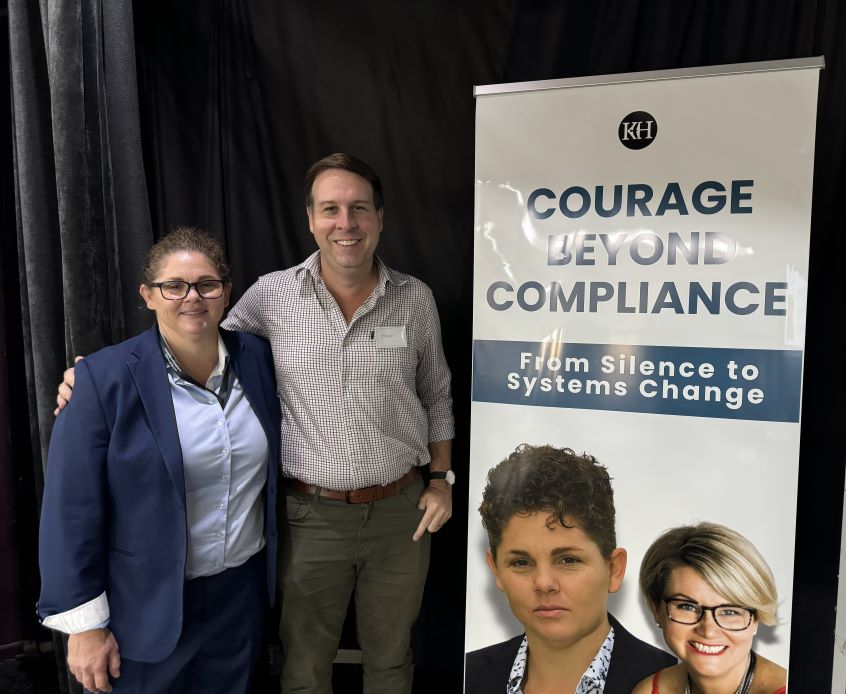
Child protection was a key focus at a workshop hosted by Wide Bay Hospital and Health Service recently for community agencies and healthcare workers.
Around seventy participants, working within the areas of child protection, domestic and family violence and sexual assault, gathered to build understanding through conversations and shared experience.
Wide Bay Hospital and Health Service Clinical Director Paediatrics, Dr Matthew Wakeley said the workshop was organised by the Child Advocacy team to raise awareness and education around child sexual abuse for health and community stakeholders. This incorporated contemporary ways in which sexual abuse of children is perpetrated including in the online environment.
The workshop was also an opportunity for health and community agencies to make connections and collaborate to develop local prevention strategies for child sexual abuse and ensure high quality short and long-term support for sexual abuse survivors.
“Child abuse, in all its forms, can manifest in a variety of ways and different settings,” Dr Wakeley said.
“Signs of child abuse can manifest physically or in disclosures to trusted adults across a range of settings including health, education, community agencies, and family activities.
“It is critical that when concerns for a child’s wellbeing are flagged within a particular setting, that those clinicians, teachers, and community members can work with others within that child’s support network to identify, report, and respond to concerns collaboratively.”
Outcomes achieved from the workshop included:
- An improved understanding of child sexual abuse and the ways it is perpetrated in our communities.
- A clearer knowledge of services in the community that support children who have experienced sexual abuse and the ability to connect vulnerable children with these services when needed.
- An opportunity to identify early signs or high-risk settings for sexual abuse and take protective action for children who are at risk of harm.
Keynote speaker for this event was child abuse survivor, author, advocate and academic Kelly Humphries who shared from lived experience and a professional evidence-based approach. Adding a wealth of knowledge on trauma response was relationship and mindset coach Justine Dean.
“One of the key messages I’d like participants to take away from this workshop is that effective responses to child sexual abuse requires a shift in lens,” Ms Humphries said.
“This workshop is about building confidence and responsiveness through deeper understanding.
“When practitioners understand the scope of offending, nuances of complex trauma, and the realities victims and survivors face, they’re equipped to respond with clarity rather than hesitation.”
Ms Humphries said ultimately, the goal is not only to empower individuals but to inspire collective responsibility.
“As a survivor, a former police officer and now an academic, I have seen firsthand where systems function well and where they fracture, and what the research is telling us,” she said.
“Effective safeguarding requires coordinated, informed and connected systems that place survivor wellbeing at the centre.”
Community awareness and early intervention play an important role, and as Ms Humphries explained, are critical to improving child safety outcomes.
“When practitioners and community members understand the signs of abuse, grooming dynamics, and the realities of trauma, they are more likely to act sooner and within scope,” she said.
“The goal is not to turn people into investigators, but to ensure they are not idle bystanders when something does not feel right.
“Awareness enables recognition. Recognition enables action. And timely, coordinated action can significantly alter outcomes for children and families.”
Feedback from those who attended the workshop was very positive. Many were left moved by the shared experience and motivated to continue their work supporting children and adolescents in the Bundaberg region.