

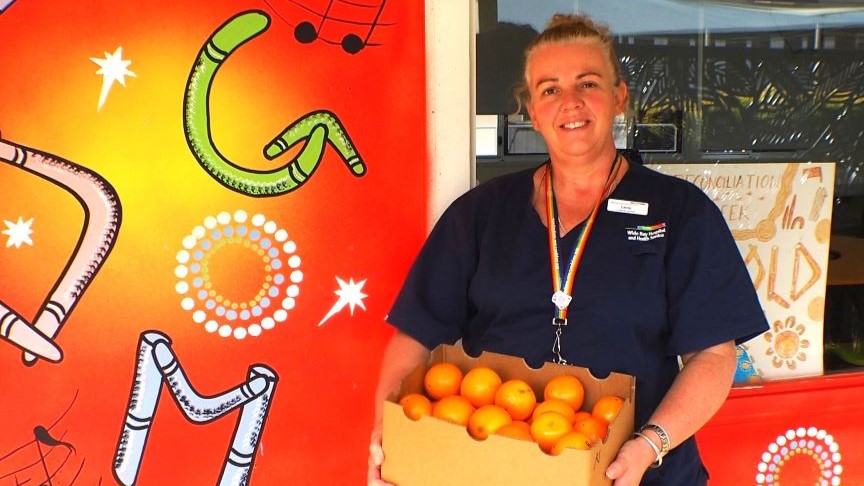
Across the Wide Bay region, a dynamic team of School-based Youth Health (SBYH) nurses are making a real difference in state high schools, inspiring young people to embrace healthier choices and take charge of their wellbeing.
Working separately to the Education Queensland State School Nursing service, Wide Bay Hospital and Health Service (WBHHS) staff have a regular presence in schools. Supporting the Student Services team, they address a range of youth health issues including sexual health, mental health and substance use.
Since the service began more than 25 years ago, thousands of students have received valuable support from SBYH nurses spread across the Fraser Coast, Bundaberg and rural areas.
Students have benefited from individual or group appointments, classroom education and whole school health promotion.
With programs such as Shine to build self-confidence, Love Bites Junior for healthy behaviours and relationships, education on the harms of smoking and vaping, and the fresh fruit program, nurses are using these approaches to engage and build rapport with students.
Based at Community Health in Gayndah is SBYH nurse Laine Collins who provides a regular, confidential school-based service to high schools in Gayndah, Mundubbera, Eidsvold and Biggenden.
Describing her job as the best in the world, it’s no surprise she has devoted 21 years to it.
“When I started it was the perfect work option to avoid shiftwork after having my children,” Laine said.
“I have an amazing and supportive team, and I love working with the adolescent age group.
“They are interesting, funny, resilient and thankful for my help.
“Having a genuine interest in their situation builds real connection and I just love those moments when I run into former students and see how amazing their lives have become.”
Laine said having a health professional within the school for students to confidentially access is such a valuable service.
“I see students for individual nursing consultations, provide classroom education sessions, conduct health promotion sessions and link into referral pathways,” she said.
“They respond well to face-to-face connections and seek support on a range of health issues - the top two being mental health, and sexual health and relationships.
“We always use evidence-based programs and information, and our team engage in regular training to stay up-to-date with the ever-changing health needs of adolescents.”
Laine explained the rise in the use of social media platforms like Tik Tok has resulted in adolescents accessing their health information online which is very often inaccurate.
“I’m always mindful to listen to the student’s point of view but include an evidence-based source for them to check out as well,” she said.
“I encourage them to chat to me if they’re not sure about something so we can fact-check it together, which works very well.
“I frequently recommend the Headspace website which has information on a wide range of issues.
“It’s a great site for anyone who has a young person in their life to check out together.”
So, what does it take to be a SBYH nurse?
Alongside clinical nursing qualifications, Laine believes strong, adaptable communication skills are essential.
“Young people often face complex connected issues that may require different strategies,” she explained.
“One of those is a family partnership approach to support young people to build resilience and overcome challenges.
“Also, as a SBYH nurse it’s important to be a helper not a fixer which is sometimes tricky as nurses like to fix things!”