
Stroke can strike anyone, at any age and when it does, immediate action saves lives.
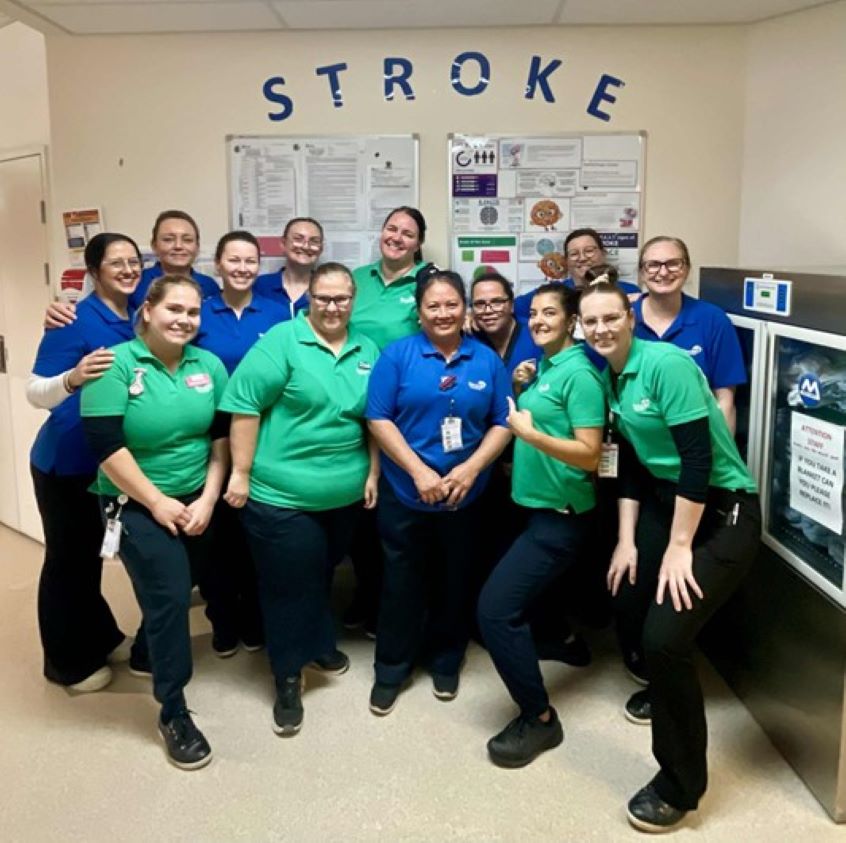
During National Stroke Week earlier this month, staff in Bundaberg Hospital’s Acute Stroke Unit were urging the community to remember the signs, act fast, and spread awareness.
The Bundaberg Acute Stroke team in Bundaberg Ward 3 provide specialised care for patients in the critical first week after a stroke.
The unit’s multidisciplinary team works together to deliver rapid, evidence-based treatment while supporting patients and their families.
Acting Nurse Unit Manager Kerri Buteux said work with stroke patients is a challenging yet rewarding process.
“We see people in their most vulnerable state, often scared and unsure of their future,” she said.
“We get to support patients and families through these times and it’s very rewarding seeing them improve.”
The team also experiences memorable moments of success, particularly when patients make significant progress after rehabilitation.
“Sometimes those small victories like seeing a patient regain movement or speak for the first time after an intense rehab can be very rewarding,” she said.
“There have been instances in a patient’s acute phase of stroke where they are unable to do anything for themselves and after intense rehabilitation, they are able to walk out the door.”
Director of Nursing Julie Spargo said stroke is not only a condition affecting older adults.
“While stroke risk increases with age, younger people can have strokes too,” she said.
“In fact, an increasing number of strokes are happening in people under 50, and there are even cases in children.
“Things like genetics, lifestyle, and certain health conditions like high blood pressure or diabetes can increase risk at any age.”
Kerri said working with stroke patients can serve as a reminder of how fragile life is and how quickly things can change.
“Stroke patients are often young and otherwise healthy individuals who, out of nowhere, find themselves facing a life-altering event,” she said.
“This might make you reflect on your own life in ways you hadn’t before sometimes appreciating the small things more or finding new ways to be grateful for your health and the relationships in your life.”
During National Stroke Week, staff want the community to remember.
“Every second counts. Recognising the symptoms of a stroke and acting quickly can make all the difference.” they said.
“The classic FAST acronym (Face drooping, Arm weakness, Speech difficulty, Time to call emergency services) is something everyone should remember.”
Stroke is a medical emergency. Signs to watch for include:
- FACE – check their face. Has their mouth drooped?
- ARMS – can they lift both arms?
- SPEECH – is their speech slurred? Do they understand you?
- TIME – time is critical. If you see any of these signs, call 000 straight away.